
Spokane summers mean outdoor grilling, long afternoons on the patio, and inevitably — greasy hands, spattered BBQ sauce, and cooking oil making its way onto your kitchen countertops. Whether you have granite or quartz countertops in your Spokane home, grease and cooking oil are among the most common surface challenges homeowners face after a good cookout. The approach for removing them differs slightly between materials, and using the wrong cleaner can cause more damage than the grease itself.
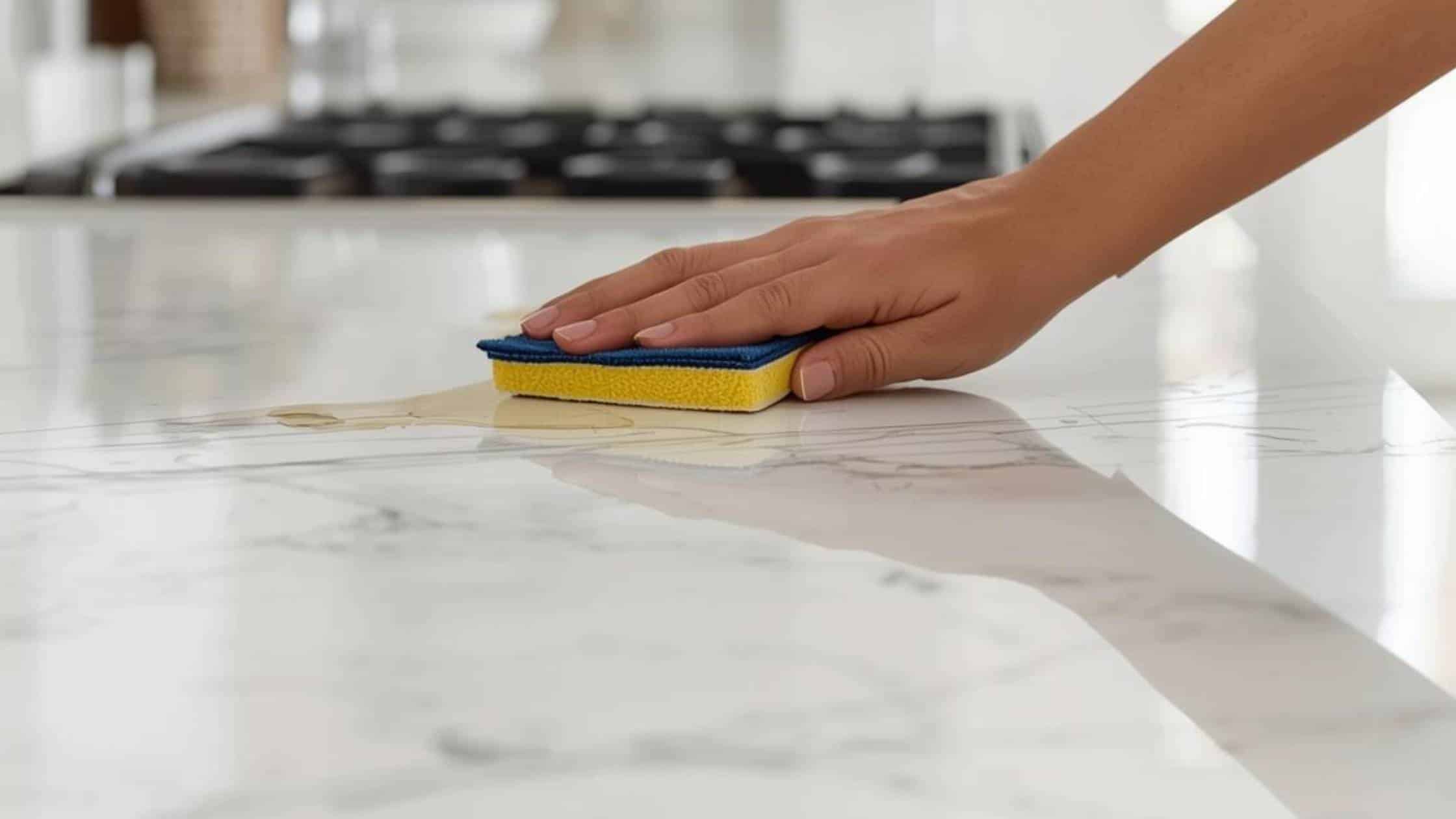
grease stain removal granite quartz Spokane
How Grease Behaves Differently on Granite vs. Quartz
Understanding the material difference helps you treat it correctly.
Granite countertops are natural stone — and natural stone is porous. Oil and grease can penetrate unsealed or inadequately sealed granite, which is why the stain sometimes seems to get worse or darker as it sits. If your granite is well-sealed, grease sits on the surface longer before penetrating, giving you more time to clean it up. If the seal has worn off, oil can soak in quickly.
Quartz countertops are non-porous — the resin binders in engineered quartz prevent liquids from penetrating the surface. This means grease from a BBQ or cooking session sits on top of the quartz surface rather than soaking in, which generally makes it easier to remove. The challenge with quartz is avoiding cleaners that can damage the surface finish.
Removing BBQ Grease from Quartz Countertops
For quartz countertops in your Spokane kitchen, the grease removal process is straightforward:
- Start with dish soap and warm water: A small amount of standard dish soap on a soft microfiber cloth will cut through most fresh BBQ grease on quartz countertops without any risk to the surface.
- For dried or hardened grease: Allow a damp cloth with a little dish soap to sit on the spot for a few minutes to soften the residue, then wipe away gently.
- Stubborn residue: A plastic scraper or putty knife can help lift dried grease without scratching the quartz surface. Do not use metal scrapers.
- What to avoid on quartz: Bleach, ammonia-based cleaners, abrasive powders, and harsh degreasers can damage quartz’s resin binders and dull the surface finish. Stick to mild dish soap or cleaners specifically formulated for quartz countertops.
Removing BBQ Grease from Granite Countertops
For granite countertops in Spokane, the approach is slightly more involved — particularly if the grease has penetrated the stone:
- Fresh grease: Blot (don’t spread) with a paper towel or soft cloth, then clean with a pH-neutral stone cleaner or a small amount of dish soap and water. Rinse thoroughly.
- Penetrated oil stains: A poultice can draw oil out of porous granite. Mix baking soda with a small amount of dish soap and water into a paste, apply it to the stain, cover with plastic wrap, and leave for 24 hours. The paste draws the oil out of the stone as it dries.
- Avoid on granite: Acidic cleaners (vinegar, lemon juice), bleach, and abrasive scrubbers. Acids can etch granite’s surface finish and break down the sealant.
- After cleaning: If your granite countertop absorbed oil easily, it may be time to reseal. A well-maintained seal is your primary defense against grease penetration.
Preventing Grease Buildup Near Cooking Areas
The best care and maintenance strategy is prevention. Using a silicone mat or trivet pad near your stovetop creates a designated landing zone for greasy pans and spatter-prone cookware. Wiping down countertops after every cooking session — rather than letting residue sit — prevents most grease from ever becoming a difficult stain.
For Spokane households that do a lot of outdoor cooking and bring gear inside, keeping a dedicated cleaning cloth near the kitchen door can help catch the worst of the outdoor grill residue before it meets your countertop.
When to Ask a Professional
If you’ve tried a poultice treatment on granite and the oil stain persists, or if you’re concerned about surface damage from previous cleaning attempts, FLOFORM’s Spokane showroom team can advise on professional cleaning options and whether re-sealing is warranted. Some deep oil stains in granite may require professional treatment to fully resolve.
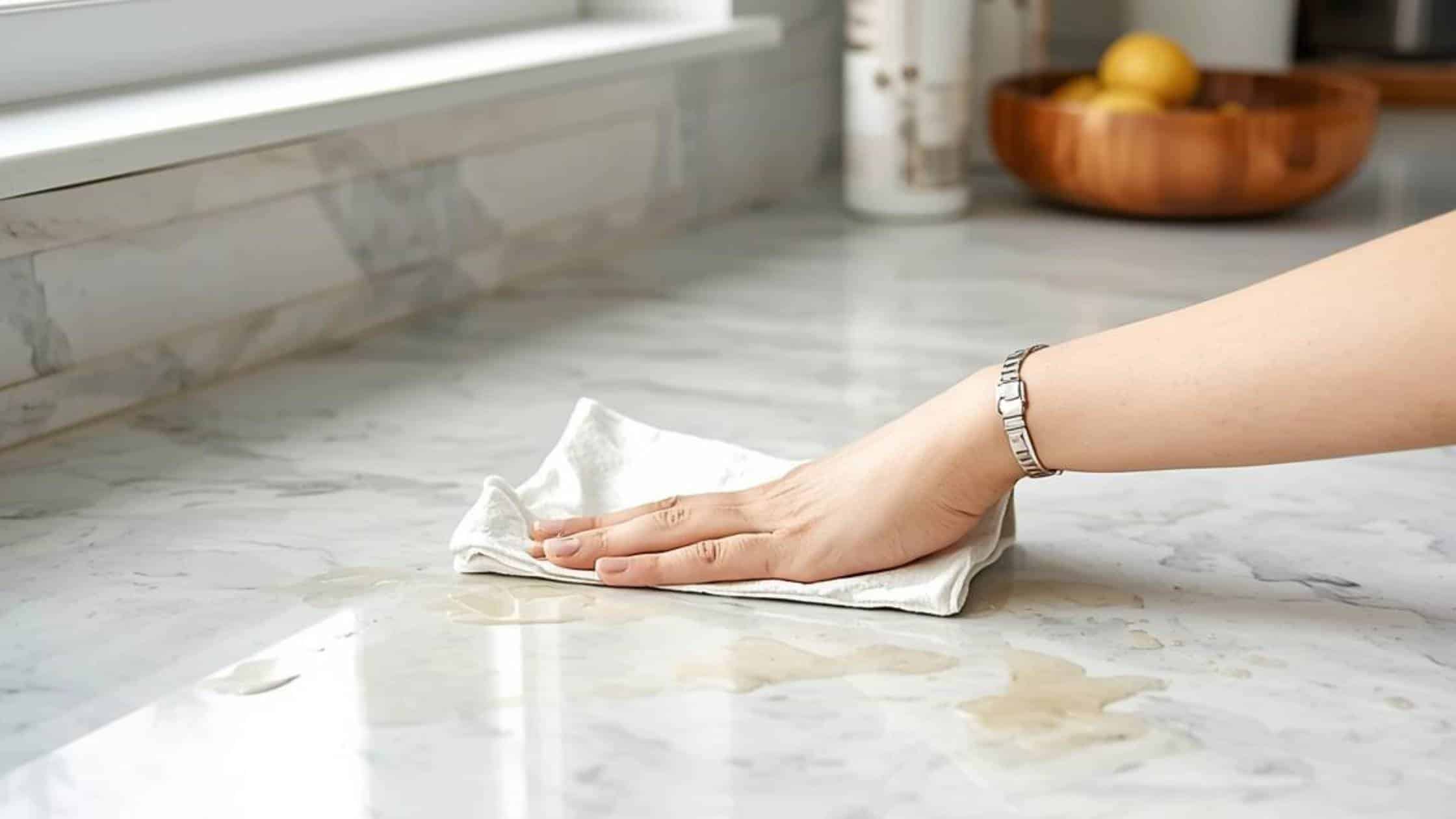
how to remove grease from quartz
Frequently Asked Questions
Q: Can BBQ grease permanently stain quartz countertops?
Quartz countertops are non-porous, so grease sits on the surface rather than soaking in. Fresh grease cleans up easily with mild dish soap. Even dried BBQ grease can typically be removed with a gentle approach. Permanent staining on quartz from grease alone is uncommon.
Q: How do I remove an oil stain that has soaked into my granite countertop?
A baking soda poultice is the most effective DIY approach for drawing oil out of granite. Apply, cover, and leave for 24 hours. For persistent stains, professional treatment may be needed. FLOFORM’s Spokane showroom can advise.
Q: Is it safe to use a degreaser on quartz countertops?
Most commercial degreasers are too harsh for quartz countertops and can damage the surface finish or resin binders. Mild dish soap and warm water is the recommended approach for grease removal on quartz.
Q: How often should I seal my granite countertops in Spokane?
Most granite countertops in residential kitchens benefit from sealing once a year, though this depends on the stone and usage. If water no longer beads on the surface, it’s time to reseal. FLOFORM‘s Spokane showroom team can advise on sealing schedules and products.
Ready to Get Started?
Have questions about caring for your granite or quartz countertops in Spokane? Stop by FLOFORM‘s Spokane showroom for hands-on guidance from a team that knows countertops inside and out. Get directions on Google Maps or visit the showroom page to plan your visit.