One of the most common surprises homeowners encounter during a countertop project is being told they need more slabs than expected.
At first glance, it might not make sense, especially if your kitchen doesn’t seem that large. But in reality, several important factors can impact how efficiently a slab can be used.
At FloForm Countertops, we believe in setting clear expectations early. Here’s what can cause a project to require additional slabs.
Directional Movement and Veining
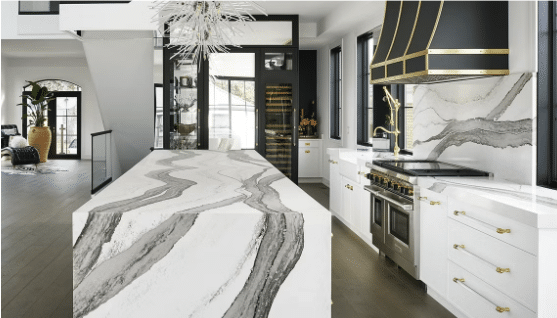
If you’ve selected a material with strong movement or veining, layout becomes extremely important.
Homeowners often want:
- Veining to flow in a specific direction
- Patterns to line up across seams
- A consistent look across the entire countertop
To achieve this, fabricators may not be able to rotate or flip pieces when curing the slab. This limits how efficiently the material can be used and may require additional slabs to maintain the desired look.
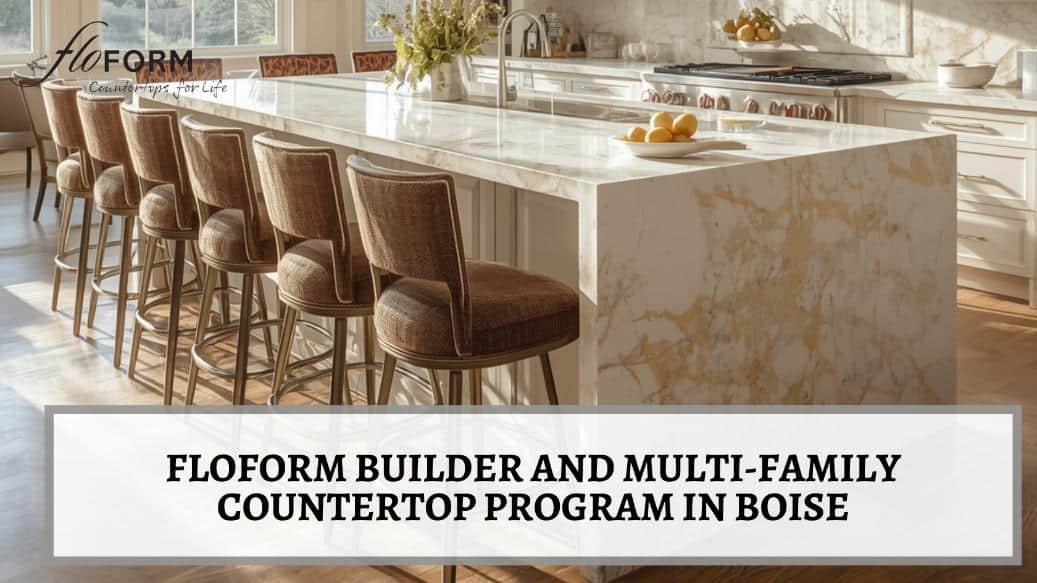
In some cases, this is especially important for large islands, waterfall edges, and open-concept kitchens.
Bookmatching and Design Preferences
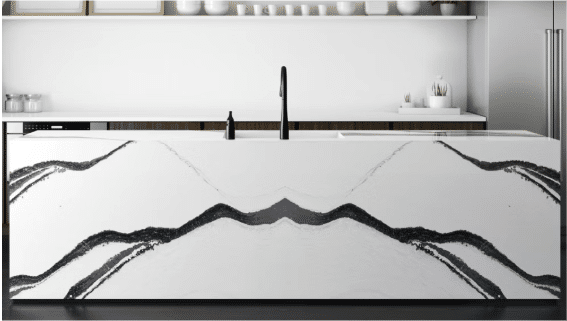
Some homeowners want a bookmatched look, where two pieces of stone mirror each other.
This creates a dramatic, high-end visual effect, but it also requires:
- Specific slab selection
- Additional material
- Precise layout planning
Because both sides must come from matching sections of stone, this often increases the number of slabs needed.
countertop slab layout
Sink and Cooktop Cutouts
Cutouts play a bigger role than most people expect.
When a sink is cut out:
- A center relief cut is often made to reduce stress in the stone
- The removed section cannot typically be reused
- Cooktop cutouts are even more limiting:
- The remaining pieces are often too small or structurally compromised to use elsewhere
These cutouts reduce the usable surface area of the slab and can contribute to needing more material.
Edge Details and Fabrication Requirements
The way your countertops are finished also affects material usage. For example:
Mitered edges
- Require additional strips of material
- Use more of the slab than standard edges
90-degree corners and layout breaks
- Can prevent efficient nesting of pieces
- Require more material to maintain strength and appearance
Fabricators can also account for:
- Blade thickness during cutting
- Maintaining structural integrity of the stone
- Avoiding weak points or fractures
All of these factors add up.
countertop fabrication process
Backsplash and Additional Pieces
Backsplashes are often overlooked when estimating material.
If you’re using the same material for:
- Full-height backsplash
- Standard backsplash
- Side splashes
These pieces must be cut from the slab as well, reducing what’s available for countertops.
Even a small backsplash can make a difference in whether a project fits within one slab or requires two.
Slab Size and Natural Variations
Not all slabs are the same size. Some materials come in smaller slabs, irregular shapes, or there’s limited usable areas due to natural features.
In these cases, even a modest kitchen layout may require additional slabs simply due to size limitations.
Why This Matters
It’s easy to assume slab usage is based only on square footage, but layout, design preferences, and fabrication requirements play a major role. A project that looks simple on paper may require:
- Additional slabs for proper layout
- Extra material for structural integrity
- Careful planning to achieve the desired aesthetic
Our Approach at FloForm Countertops
countertop material requirements
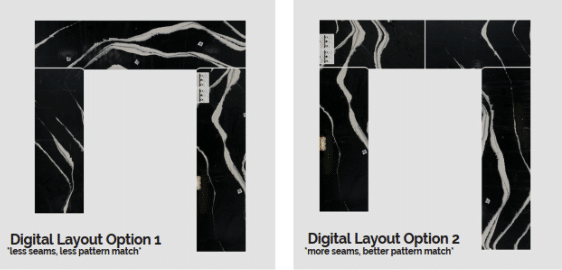
At FloForm Countertops, we take the time to walk homeowners through slab layout before the fabrication begins. With tools like the digital slab layout, you can:
- See how your slab will be cut
- Understand where seams will be placed
- Visualize how patterns will flow
Needing an additional slab isn’t a mistake, it’s often the result of thoughtful design, careful planning, and proper fabrication.
From veining direction to cutouts and edge details, many factors influence how material is used. The best way to avoid surprises is to:
Plan early, ask questions, and review your layout before fabrication begins.
At FloForm Countertops, we’re here to guide you through every step so your final result looks exactly how you envisioned it.